June 11, 2026 • Saoirse Pellegrini • 8 min reading time • Prices verified June 17, 2026
The Faux Fur Stole: Marilyn's Most Overlooked Costume Upgrade
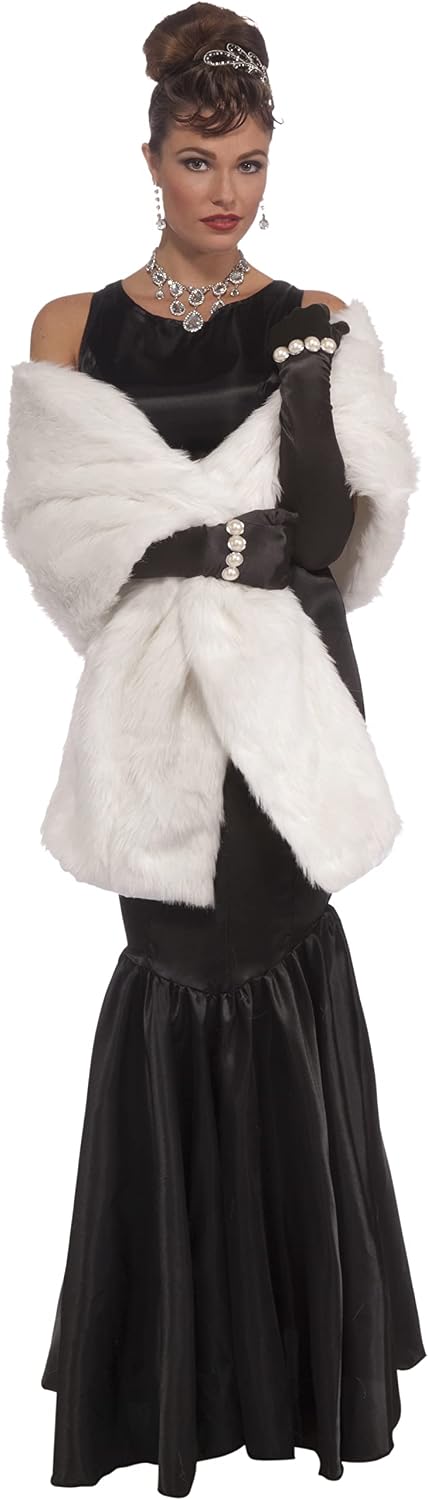
If you’ve ever Googled “Marilyn Monroe costume,” you already know the white dress — the one that billows up in the famous subway-grate scene from The Seven Year Itch. That’s the image most people start with, and a good white halter dress gets you 80% of the way there. But there’s a small prop that quietly does the other 20%, and almost every first-time buyer skips it: the faux fur stole. A stole (pronounced just like it sounds) is a wide, rectangular wrap — like a long scarf on a grander scale — worn draped across the shoulders or wrapped loosely around the arms. In Marilyn’s world, it was typically done in white or ivory mink (real fur, back then). Today, faux fur — meaning synthetic material made to look and feel like animal fur, without using actual animal products — gives you the same visual punch for a fraction of the cost. This guide will show you exactly what to look for, which price tiers make sense for which buyers, and why this single add-on might be the upgrade your costume has been missing.
Why the Stole Matters More Than Most Accessories
Here’s the honest case for spending $20–$80 on a piece of fabric when you already have the dress and the wig sorted.
Marilyn Monroe’s style, as Smithsonian Magazine’s coverage of her enduring fashion legacy explains, was built on a very specific tension: softness and glamour existing in the same frame at the same time. The white dress reads as playful and light. The fur stole tips the entire look toward luxury — toward the Old Hollywood version of Marilyn that showed up at premieres, in publicity shoots, and in the famous “Diamonds Are a Girl’s Best Friend” number. Without the stole, you look like someone at a party. With it, you look like someone who arrived at the party in a town car.
Vogue’s breakdown of Marilyn’s key wardrobe pieces makes the same point differently: it wasn’t any single garment that created her image — it was the layering of softness on softness. Fur over a satin or chiffon dress. Rhinestones against pale skin. The stole is that second layer of soft texture, and it photographs dramatically well even under basic party lighting or a phone camera flash.
There’s also a practical argument: if your party or event runs into a cool evening, a stole gives you something to wrap up in that stays completely in character. That’s a function almost no other Marilyn accessory pulls off.
What to Actually Look For: The Four Variables That Matter
Not all faux fur stoles are created equal. Based on aggregated buyer reviews across major retail platforms and the product specifications published by the most commonly recommended brands in this category, four variables separate a stole that photographs like the real thing from one that photographs like a bath mat.
1. Pile length and density Pile refers to the length of the individual synthetic fibers — the “fur” part of faux fur. Reviewers consistently flag this as the most important variable. A pile of roughly 1.5 to 2.5 inches gives you the lush, cloud-like appearance that reads as mink from six feet away or in a photo. Shorter pile looks flat and synthetic. Longer pile (3 inches and up) starts to look shaggy or costume-cheap rather than glamorous.
2. Color: white vs. ivory vs. champagne The classic Marilyn stole is white — but pure white under warm party lighting or stage lighting can wash out dramatically. Harper’s Bazaar’s guide to Old Hollywood glamour dressing notes that ivory and champagne tones photograph as “warm white” and tend to complement a wider range of skin tones without the blowout effect pure white creates under flash photography. If you’re shooting any kind of styled photos, ivory is almost always the smarter call.
3. Width and length A true wrap-style stole reads as glamorous because it has enough fabric to drape generously. Look for a width of at least 18 inches and a length of 60–72 inches. Anything narrower than 14 inches starts to read as a scarf, not a stole — the silhouette is different, and the effect collapses.
4. Backing material The underside of a faux fur stole is either a satin-finish backing or a plain fabric backing. Satin-backed stoles hold their shape on the shoulder better — they don’t catch on fabric or slide off as quickly, and they look finished when the stole slips down your arm (which it will). Reviews from buyers of theatrical-grade wrap accessories consistently mention backing quality as the difference between a stole that stays put for three hours and one you’re constantly adjusting.
By the Numbers
| Price Range | What You’re Getting | Best For |
|---|---|---|
| $18–$35 | Short-pile, narrow stoles; often acrylic-heavy | One-night Halloween, group costumes |
| $40–$75 | Medium-pile, satin-backed, full 60”+ length | Parties, themed events, photo shoots |
| $80–$140 | Dense long-pile, weighted hem, theatrical grade | Tribute performers, stage use, cosplay |
| $150–$300+ | Bespoke or vintage-replica, custom sizing | Professional productions, collector looks |
Matching the Stole to the Specific Marilyn Look You’re Building
This is where practitioners tend to make their first real mistake: buying a stole without anchoring it to a specific Marilyn reference. The stole reads differently depending on which look you’re assembling.
The Seven Year Itch / Casual Marilyn This is the white halter dress look — playful, light, windswept. If this is your reference, a slightly narrower stole in bright white or pale ivory works well. The look is less formal, so you don’t need heavy theatrical-grade fur. The $40–$75 range hits the sweet spot here. Drape it loosely over one shoulder rather than wrapping both, which keeps the casual energy intact.
“Diamonds Are a Girl’s Best Friend” / Pink-and-Champagne Marilyn This is the pink column gown look from Gentlemen Prefer Blondes — structured, deliberate, performance-ready. The Hollywood Reporter’s analysis of Monroe’s wardrobe archive notes that the fur accessories in this sequence were specifically chosen to read as luxurious even under stage lighting, which means you need density and length. For this look, go to the $80–$140 range and prioritize pile density over everything else. The stole here should wrap both shoulders symmetrically and stay put.
The Premiere / Red Carpet Marilyn Vanity Fair’s coverage of Monroe’s auction wardrobe pieces reinforces that the fur wraps she wore to public events were consistently longer and more enveloping than most costume versions attempt. If you’re building this look for a gala, a theatrical production, or a professional tribute appearance, the dimensions matter: 70+ inches of length, 20+ inches of width, and a satin backing are non-negotiable. This is a bespoke or high-end retail purchase.
The Decision Rule: Which Stole Should You Actually Buy?
Here’s the plain-language framework we’d put in front of any buyer right now.
If your total costume budget is under $75: Put $25–$35 toward the stole and prioritize pile length over everything else. Read buyer reviews specifically for the phrase “photographs well” — that’s the signal that the pile density is doing its job. Skip anything listed as a “shawl” or “wrap” that doesn’t explicitly call out faux fur construction.
If you’re building a complete Marilyn kit for a party or photo shoot and you’ve already got the dress and wig handled: The stole is where we’d put the next $50–$75. This is the single accessory with the highest visual return-per-dollar in the entire Marilyn accessory hierarchy. Rhinestones are close, but they require the right neckline to land. A stole works over virtually any version of the white dress.
If you’re a tribute artist, theatrical costumer, or cosplayer investing $150+ in the overall look: Don’t buy a mass-market stole. Commission or source a custom-width, custom-length piece through Etsy’s bespoke costume ateliers — search specifically for “theatrical faux mink stole” with your exact measurements. The gap in quality between a $35 retail stole and a $120 custom piece is visible on stage and in professional photography. It’s worth the delta.
If you already own a stole but it keeps sliding off: This is a backing problem, not a fur problem. A simple solution noted consistently in theatrical wardrobe communities is sewing a single strip of non-slip elastic along the interior back edge — it anchors against the fabric of the dress and holds the drape in place for hours.
One final note that Harper’s Bazaar’s Old Hollywood guide surfaces and we think is genuinely useful: the stole is one of the few Marilyn accessories where going slightly oversized is almost always better than going undersized. When in doubt about dimensions, size up. The look telegraphs luxury through volume, and a stole that’s a little too generous reads as intentional glamour. One that’s a little too narrow just reads as cold.
The white dress gets you in the door. The stole is what makes people take the photo.